
 |
Nano Hydroxyapatite
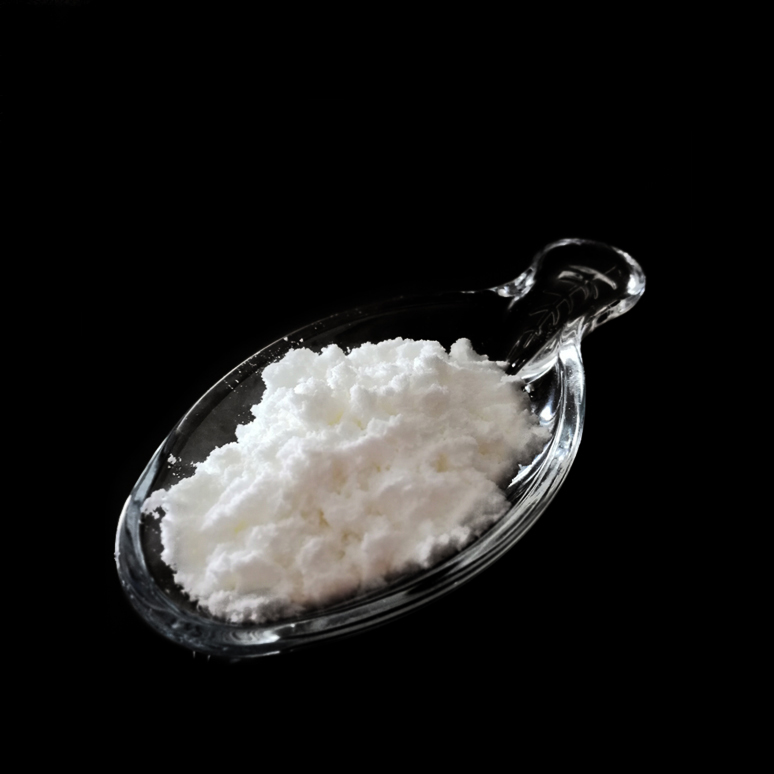
Nano Hydroxyapatite is a new types of inorganic ceramic material, which has unique biological activity. It overcomes the characteristics of traditional hydroxyapatite, such as difficult plasticity , brittleness , slow degradation and so on. It has high chemical activity, which is conducive to increase the biological activity of material, increase the surface area, and facilitate cell adhesion and growth.
Also known as hydroxyapatite, basic calcium phosphate, is the natural mineralization of calcium apatite (Ca5 (PO4) 3 (OH)). But it is often written in the form of (CA10 (PO4) 6 (OH) 2) to highlight that it is composed of two parts: hydroxy and apatite. OH group can be replaced by fluoride, chloride and carbonate ions to form fluorapatite or chloroapatite, in which calcium ions can be replaced by a variety of metal ions through ion exchange reaction to form M apatite corresponding to metal ions (M represents the gold ions replacing calcium ions). Hydroxyapatite (HAP) is the main inorganic component of vertebrate bones and teeth. The content of hydroxyapatite in human enamel is about 96 wt.% (92 vol.%) and in bone is about 69 wt.%. Hydroxyapatite has excellent biocompatibility and biological activity, and can be used as a bone or tooth inducer, which has better remineralization, desensitization and whitening effect on teeth in the field of oral health care. The results show that HAP particles have good biocompatibility and high affinity with enamel. The mineralized solution can effectively form remineralized deposits, prevent the loss of calcium ions, solve the problem of enamel demineralization and fundamentally prevent caries. The toothpaste containing HAP material has strong adsorption on salivary protein and dextran, can reduce the dental plaque of patients' mouth, promote the healing of gingivitis, and has better prevention and treatment effect on caries and periodontal disease.
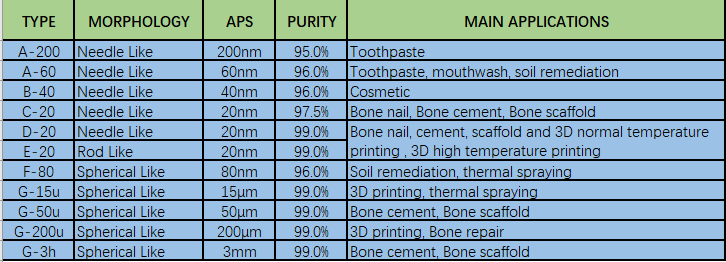
Different Specifications:
Nano Hydroxyapatite
Nano Hydroxyapatite is a new types of inorganic ceramic material, which has unique biological activity. It overcomes the characteristics of traditional hydroxyapatite, such as difficult plasticity , brittleness , slow degradation and so on. It has high chemical activity, which is conducive to increase the biological activity of material, increase the surface area, and facilitate cell adhesion and growth.
Also known as hydroxyapatite, basic calcium phosphate, is the natural mineralization of calcium apatite (Ca5 (PO4) 3 (OH)). But it is often written in the form of (CA10 (PO4) 6 (OH) 2) to highlight that it is composed of two parts: hydroxy and apatite. OH group can be replaced by fluoride, chloride and carbonate ions to form fluorapatite or chloroapatite, in which calcium ions can be replaced by a variety of metal ions through ion exchange reaction to form M apatite corresponding to metal ions (M represents the gold ions replacing calcium ions). Hydroxyapatite (HAP) is the main inorganic component of vertebrate bones and teeth. The content of hydroxyapatite in human enamel is about 96 wt.% (92 vol.%) and in bone is about 69 wt.%. Hydroxyapatite has excellent biocompatibility and biological activity, and can be used as a bone or tooth inducer, which has better remineralization, desensitization and whitening effect on teeth in the field of oral health care. The results show that HAP particles have good biocompatibility and high affinity with enamel. The mineralized solution can effectively form remineralized deposits, prevent the loss of calcium ions, solve the problem of enamel demineralization and fundamentally prevent caries. The toothpaste containing HAP material has strong adsorption on salivary protein and dextran, can reduce the dental plaque of patients' mouth, promote the healing of gingivitis, and has better prevention and treatment effect on caries and periodontal disease.
Different Specifications: